30 Countries back proposed Fossil Fuel Treaty at COP31
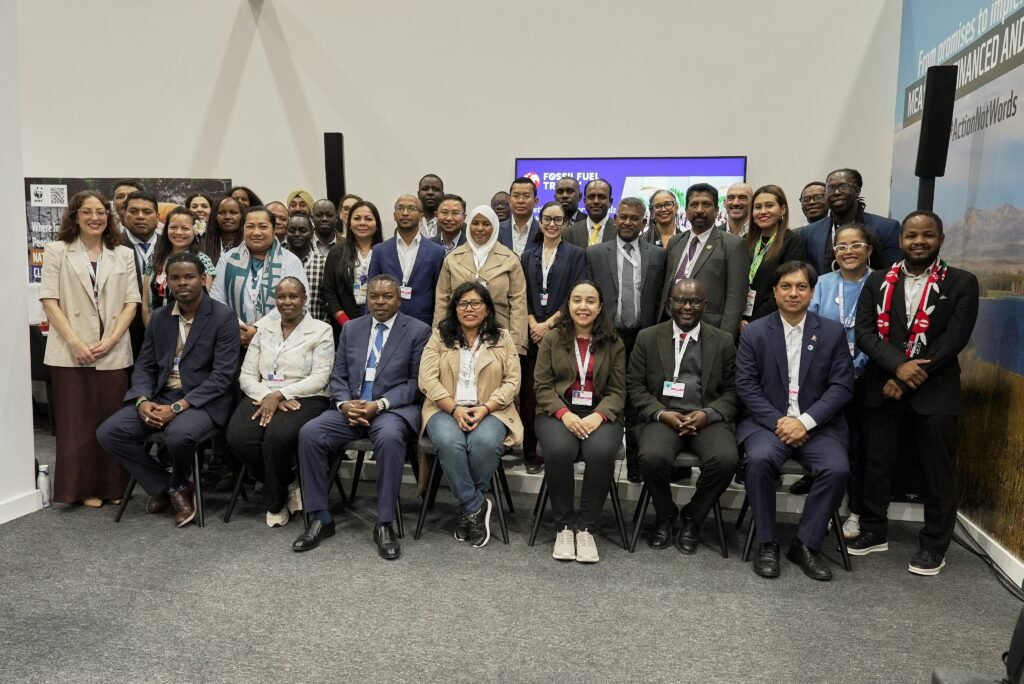
ANTALYA, November 19 (Daily Global South)- Support for a proposed international Fossil Fuel Treaty has grown to 30 countries, as five more nations joined the initiative during the ongoing UN Climate Change Conference (COP31) in Antalya, Türkiye.
Saint Vincent and the Grenadines, Guatemala, Panama, Kenya and Ghana are among the latest countries to join the bloc advocating stronger international cooperation to phase out coal, oil and gas.
The announcement comes as climate negotiators face difficult discussions over how to address fossil fuels in the conference’s final outcome. The issue has become a key point of debate, reflecting differences among countries over the pace of the energy transition, climate responsibilities and the financial support required by developing economies.
A revised draft of the COP31 agreement published on November 19 removed earlier references to ending or limiting fossil fuel use, raising concerns among climate campaigners about the direction of the negotiations. The development has added urgency to calls by treaty supporters for a separate international framework to guide a just and equitable transition.
Government representatives from across the Global South called for clear international rules, financial assistance and technology transfer to ensure that countries can move away from fossil fuels without compromising their development priorities.
Ambassador Kevin Hope of Saint Vincent and the Grenadines said countries least responsible for climate change were showing leadership in addressing its impacts. He stressed that a treaty could help establish who should act first, at what pace and with what financial support.
He also highlighted the vulnerability of Caribbean island nations, which face repeated climate-related disasters and mounting reconstruction costs. Referring to the devastation caused by Hurricane Beryl in 2024, he said the transition away from fossil fuels was a matter of survival for the region.
Guatemala’s Environment Minister Edwin Castellanos highlighted the country’s vulnerability to climate impacts, including severe drought, while noting that renewable sources already account for 66% of its electricity generation. He said international cooperation was essential to achieving a fair transition.
Panama’s Environment Minister Juan Carlos Navarro called for urgent political action, while Ghana’s Environment Minister Zanetor Agyeman-Rawlings said development priorities and equity must remain central to the global energy transition.
Ministers from Nepal, Tuvalu, Vanuatu and Fiji also voiced support for stronger international cooperation. They said a proposed treaty could complement the Paris Agreement by helping establish practical pathways for a just, orderly and equitable transition.
The countries plan to continue discussions during COP31 negotiations and through the Santa Marta Process, which is advancing dialogue on national and regional pathways away from fossil fuels. The next international conference on the just transition away from fossil fuels is scheduled to take place in Tuvalu in July 2027.
The Fossil Fuel Treaty Initiative brings together governments, civil society and Indigenous groups to develop an international framework for a just, financed and equitable transition away from fossil fuels. Its proposal calls for wealthier countries to lead the phase-out while ensuring that developing nations receive the resources and support needed to pursue cleaner energy pathways.
COP31, taking place from November 9 to 20, has brought together governments, international organisations, businesses and civil society to advance climate action. Key issues include climate finance, emissions reduction, adaptation, loss and damage, and the transition to cleaner energy.
The growing support for the proposed treaty reflects an effort by countries across Africa, Asia, the Caribbean, Latin America and the Pacific to secure a stronger voice in shaping the future of global energy policy.