Balochistan: from colonial rule to unequal development
By: Nazya Hayat
Balochistan’s transition from colonial administration to Pakistan’s federal and provincial governance structures did not automatically bring political empowerment or equitable development. Its history raises a fundamental question: who has governed the region, benefited from its resources and borne the cost of those decisions?
Balochistan’s political and developmental history is often examined through its strategic location, natural resources and recurring security challenges. Yet the evolution of institutions governing its people is equally important. Before partition, the region comprised British-administered territories and princely states. After 1947, these territories entered Pakistan through different arrangements, followed by the One Unit system and the restoration of provincial status in 1970.
Although these changes transformed the administrative structure, they did not necessarily dismantle the unequal power relations inherited from colonial rule. Older hierarchies persisted alongside bureaucratic, political and security institutions, leaving a gap between those exercising authority and the communities affected by their decisions. Before 1947, Balochistan was not a single, uniformly administered territory. British Balochistan was governed through a Chief Commissioner’s administration, while Kalat, Makran, Las Bela and Kharan operated under princely arrangements with varying degrees of internal autonomy. British influence was exercised through treaties, political agents, subsidies and strategic agreements.
The Sandeman system, developed by British administrator Robert Sandeman during the late nineteenth century, institutionalised indirect rule through tribal chiefs. Sardars received allowances and administrative responsibilities, including maintaining local order. This strengthened selected tribal intermediaries while limiting the independent authority of the Khan of Kalat. According to Encyclopaedia Iranica, British subsidies and direct political relationships with individual sardars contributed to divisions within the tribal structure and weakened the Khan’s authority. The arrangement gradually elevated the influence of selected chiefs while placing their authority under British supervision. Rather than representing independent local autonomy, the Sandeman system was a form of colonial management that reorganised existing power structures around imperial priorities, including security, communications and strategic access towards Afghanistan. Its political consequences extended beyond British withdrawal.
Balochistan’s integration into Pakistan involved different and contested political arrangements. The Khan of Kalat declared independence in August 1947, while negotiations over the state’s future continued. Kalat acceded to Pakistan on March 27, 1948, a development that remains contested in historical and political interpretations. Makran, Las Bela and Kharan entered Pakistan through separate accession arrangements. The historical process also raises questions about political representation. The Government of Balochistan’s historical account notes that representatives of Kalat were excluded from the June 1947 Shahi Jirga proceedings concerning the future of British-administered Balochistan. Consequently, the vote cannot be interpreted as a unanimous decision by all territories that now constitute the province.
Another major administrative shift came in 1955, when the One Unit scheme merged the provinces and princely territories of West Pakistan into a single administrative unit. Balochistan consequently lost its separate provincial political identity and representation within the centralised structure. The arrangement was dissolved in 1970, restoring the province’s status with its own assembly and government. However, provincial status did not automatically resolve questions of political representation, resource ownership and accountability. Federal institutions, provincial administrations, traditional elites and security structures continued to exercise overlapping influence. The central issue remained whether the people of Balochistan had meaningful influence over decisions affecting their lives.
French philosopher Michel Foucault’s concept of disciplinary power offers a useful framework for examining this institutional relationship. In Discipline and Punish (1975), Foucault explains how institutions regulate individuals through surveillance, classification, routines, punishment and the normalisation of behaviour. Applied to Balochistan, this perspective raises an important question: how does institutional power shape citizens’ lives when the state exercises regulatory authority but delivers essential services unevenly?
The issue extends beyond schools and prisons. Administrative offices determine access to public services, development authorities influence land use and infrastructure, while security institutions exercise powers related to law enforcement and territorial security. These institutions have different functions and should not automatically be characterised as instruments of oppression. However, their authority deserves scrutiny where accountability and public participation remain limited.
The contrast between the state’s ability to regulate and secure territory and its uneven provision of electricity, gas, water, education and economic opportunities is particularly significant. This does not establish that deprivation is deliberately engineered as a disciplinary strategy. Rather, Foucault’s framework helps examine how citizens experience institutional power when administrative restrictions and security measures are more visible than reliable public services.
Balochistan’s natural wealth makes these governance questions particularly important. The province has substantial deposits of natural gas, copper, gold and other minerals, yet resource extraction has not translated into equally distributed development. A 2018 research briefing by the UK House of Commons Library described Balochistan as resource-rich but persistently underdeveloped, highlighting its significant poverty and weak human-development indicators.
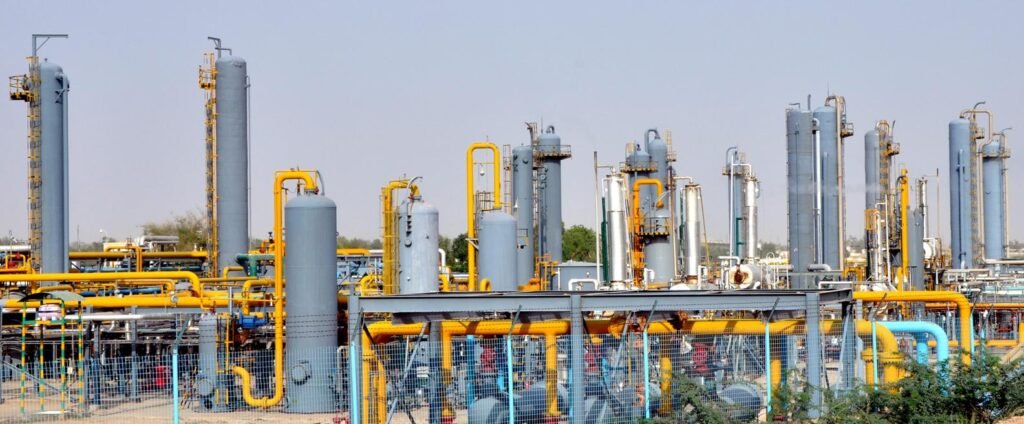
The energy sector illustrates this disparity. Balochistan is home to the Sui gas field, yet access to natural gas remains limited in many parts of the province. The gap between resource production and household access raises questions about infrastructure investment, distribution networks and the allocation of economic benefits. Household data further reflects the divide. According to the Pakistan Bureau of Statistics’ Household Integrated Economic Survey (HIES) 2024–25, only 33 per cent of households in Balochistan use gas as their main cooking fuel, while 57 per cent rely on wood or sticks. These figures highlight the continued dependence on traditional cooking fuels, particularly in rural communities.
The statistics also underline the importance of examining infrastructure investment and public access alongside resource production. Natural wealth alone does not guarantee improvements in living standards when distribution systems and development opportunities remain uneven. Environmental pressures further compound Balochistan’s development challenges, particularly water scarcity and groundwater depletion. The province’s arid climate, excessive extraction through tube wells, changing rainfall patterns and declining vegetation have placed considerable pressure on agriculture, livestock and rural livelihoods.
These challenges cannot be attributed to a single government or historical period. Climate change, population growth, agricultural practices and weaknesses in water management all contribute. Nevertheless, they raise fundamental questions about who controls land, water, minerals and energy, and how the resulting economic and environmental costs are distributed. Sustainable development therefore requires more than the extraction of natural resources. It also depends on effective environmental regulation, transparent resource management and meaningful participation by local communities in decisions affecting their livelihoods.
Recurring insurgencies and counterinsurgency operations have further complicated relations between Balochistan and the federation. Resistance movements emerged during different periods, including following accession, during the One Unit era and in the 1970s, with subsequent conflicts continuing to affect civilian life, infrastructure, education and political participation. The 1973–77 insurgency was particularly significant. It followed the dismissal of the National Awami Party-led provincial government in February 1973 and the subsequent arrest of provincial political leaders. The conflict and the state’s military response deepened an already strained relationship between the province and the federation.
Security threats are real, and attacks by militant organisations have caused significant harm to civilians, security personnel and public infrastructure. However, security measures alone cannot address the underlying challenges of political representation, public service delivery and accountable governance. Treating political grievances primarily as security concerns risks narrowing the space for legitimate debate and democratic participation. Foucault’s theory of disciplinary power and Marxist political economy offer complementary perspectives on these dynamics. While the former examines how institutions regulate individuals and populations, the latter considers who controls resources and benefits from existing economic arrangements.
Together, these approaches help explain how institutional authority, unequal resource distribution and uneven development can reinforce one another. In Balochistan, the debate is not simply about whether institutions exist, but whether they are accountable to the people, distribute opportunities fairly and respond to the needs of local communities. Balochistan’s history is not simply one of colonial neglect followed by post-partition progress. It reflects successive governance arrangements in which authority shifted from colonial administrators and selected tribal intermediaries to federal institutions, provincial governments and modern security structures.
Its environmental pressures, energy inequalities, poverty and recurring insecurity must be understood through the distribution of political power, resource management, institutional accountability and opportunities available to ordinary people. The success of governance should not be measured by the number of institutions operating in a territory or their capacity to exercise authority. It should be measured by their ability to protect citizens, preserve the environment, distribute resources fairly and remain answerable to the people they serve.
For Balochistan, the unresolved question goes beyond administrative reform: can the state build lasting legitimacy in a region where its authority is extensive, but the benefits of governance remain unevenly distributed?
About the author

Nazya Hayat is a freelance content writer whose interests include peacebuilding, solidarity, conflict, war and human behaviour. Her work explores the social dynamics behind complex issues, using research and analysis to identify systemic gaps and evidence-based solutions.
Disclaimer: The views expressed in this article are those of the author and do not necessarily reflect the views of Daily Global South.