Beyond Borders: My Journey to China for 2026 Media Cooperation Forum
By. Noureen Chaudry
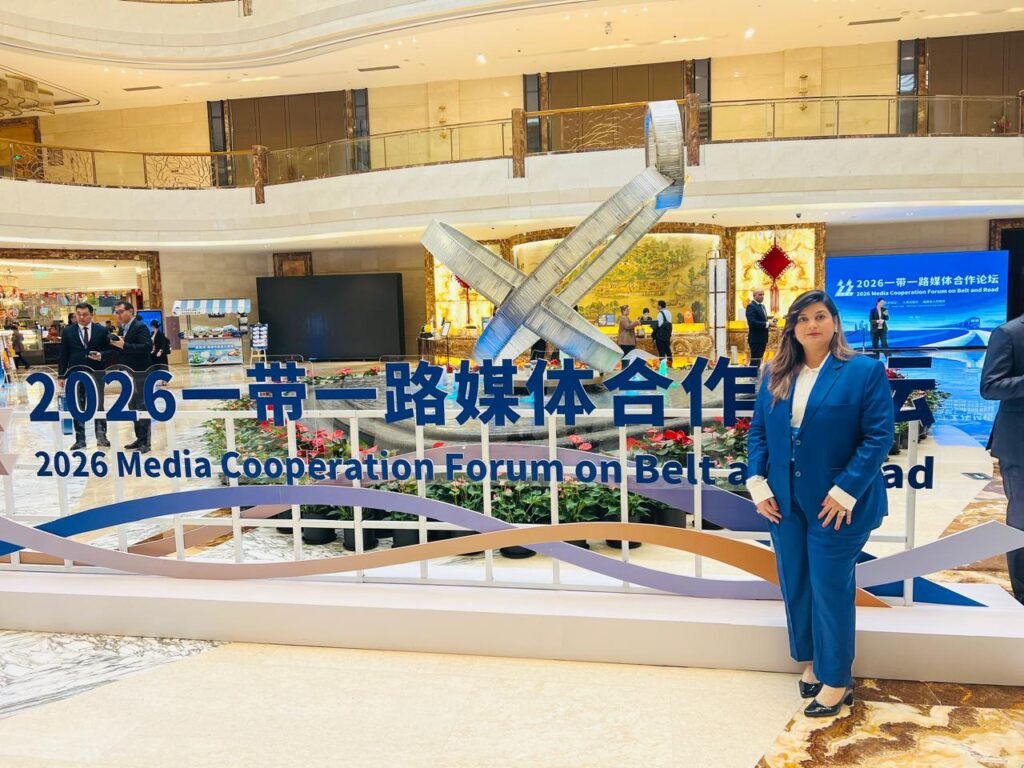
Some journeys are measured in kilometres, while others are remembered for the experiences, friendships, knowledge and memories they leave behind. My recent visit to China to attend the 2026 Media Cooperation Forum on Belt and Road was undoubtedly one of the most memorable journeys of my professional and personal life. Jointly hosted by People’s Daily and the People’s Government of Fujian Province, the event offered much more than an opportunity to participate in an international gathering. It broadened my horizons, introduced me to new perspectives and gave me memories I will cherish for years to come.
As a Pakistani journalist, I have always believed that journalism goes beyond reporting events. It connects people, builds bridges between societies and helps nations understand one another. Having spent years covering CPEC, Pakistan-China relations, regional connectivity and development cooperation, visiting China and participating in an international media gathering was particularly meaningful to me.
From the moment I arrived, I was eager to experience the country beyond the stories I had previously read, discussed and written. China’s modern infrastructure, urban development, technological advancement and cultural richness made a strong impression. Observing these developments firsthand offered a different perspective from what one gains through newspaper articles, television reports and official accounts.
The forum brought together more than 200 representatives of media organisations and other institutions from around 100 countries, alongside representatives of international and regional organisations, including the Shanghai Cooperation Organisation (SCO).
Held under the theme, “Pursuing Common Understandings and Aspirations: A Decade of Belt and Road Media Cooperation,” the forum highlighted the importance of communication, collaboration and mutual understanding in an increasingly interconnected world.
Being part of such a distinguished gathering was an honour. Sharing a platform with journalists, media executives, communication experts and representatives from different countries provided an opportunity to exchange professional experiences, explore diverse perspectives and discuss the responsibilities of journalism in a rapidly changing media landscape.
The opening ceremony was particularly impressive, featuring speeches by senior Chinese officials and international representatives. Among the prominent speakers were Xian Hui, Vice Chairperson of the National Committee of the Chinese People’s Political Consultative Conference; Hu Heping, Executive Deputy Head of the Publicity Department of the CPC Central Committee; Zhao Long, Secretary of the CPC Fujian Provincial Committee; and Yu Shaoliang, President of People’s Daily.
International speakers included Pavel Negoitsa, General Director of Rossiyskaya Gazeta, and Oleg Kopylov, Deputy Secretary-General of the Shanghai Cooperation Organisation, along with other distinguished guests. Their participation reflected the importance attached to media cooperation as part of broader international engagement.
The Belt and Road Initiative, launched by Chinese President Xi Jinping in 2013, was an important theme of the discussions. The conversations also brought attention to the role of media in communicating the initiative’s developments, sharing experiences and encouraging dialogue among participating countries.
Beyond the formal sessions, one of the most rewarding aspects of the visit was meeting media professionals and delegates from different cultural and professional backgrounds. Our conversations extended beyond journalism to include our countries, traditions, development priorities and the challenges facing modern societies. Despite differences in language and media environments, we shared a common interest in telling stories, exchanging knowledge and promoting greater understanding.
These interactions reinforced my belief that journalists have an important role in reducing misunderstandings between nations. A well-researched story can introduce one society to another, challenge stereotypes and help audiences recognise shared concerns and aspirations. Personal connections, in turn, can create lasting foundations for professional and international cooperation.
Fuzhou was another memorable part of the journey. The city offered an opportunity to experience the character of Fujian Province while participating in a forum centred on international engagement. I particularly enjoyed exploring Chinese culture, experiencing local food and hospitality, and observing how modern development exists alongside traditional heritage.
As a journalist, experiencing China firsthand was especially valuable. There is a meaningful difference between reporting on a country from available information and having the opportunity to observe its people, places and everyday environment. Such experiences broaden one’s understanding and provide valuable context for future reporting.
I returned to Pakistan with beautiful memories, new friendships, valuable professional connections and fresh ideas. More importantly, the visit strengthened my commitment to journalism as a means of promoting understanding and cooperation across borders.
This was not simply another international trip. It was an opportunity to represent my country, engage with the global media community and learn from people whose experiences and perspectives may differ from my own.
Some journeys take us to new destinations, while others open new dimensions of thought and experience. My visit to China was both. It remains one of the most inspiring chapters of my professional journey.
As I look back, one thought stays with me: borders may divide geographical territories, but stories, friendships and shared aspirations have the power to bring people together. And that, perhaps, is one of the greatest contributions of international media cooperation.