Beyond the Silk Road: China’s reach in South Asia and missing link of regional integration
By. Md. Tarek Hossain-
November 11 (Daily Global South)- China’s economic engagement with South Asia has expanded significantly over the past decade, driven by trade, infrastructure development, investment and growing connectivity. In 2025, trade between China and South Asian countries surpassed US$200 billion for the first time, increasing 10.7 per cent year on year. The momentum continued into 2026, with bilateral trade growing 15.8 per cent in the first four months, according to China’s State Council Information Office.
The figures underline China’s growing economic importance to the region. Yet the relationship is not uniform. While some countries view Chinese investment as an opportunity to address infrastructure and development gaps, others remain cautious because of geopolitical tensions, debt concerns and an uneven distribution of trade benefits.
Since President Xi Jinping launched the Belt and Road Initiative (BRI) in 2013, Beijing has presented it as a framework for improving connectivity through roads, railways, ports, energy projects and industrial cooperation. In South Asia, the initiative has taken different forms, shaped by each country’s economic priorities, political circumstances and relationship with China.
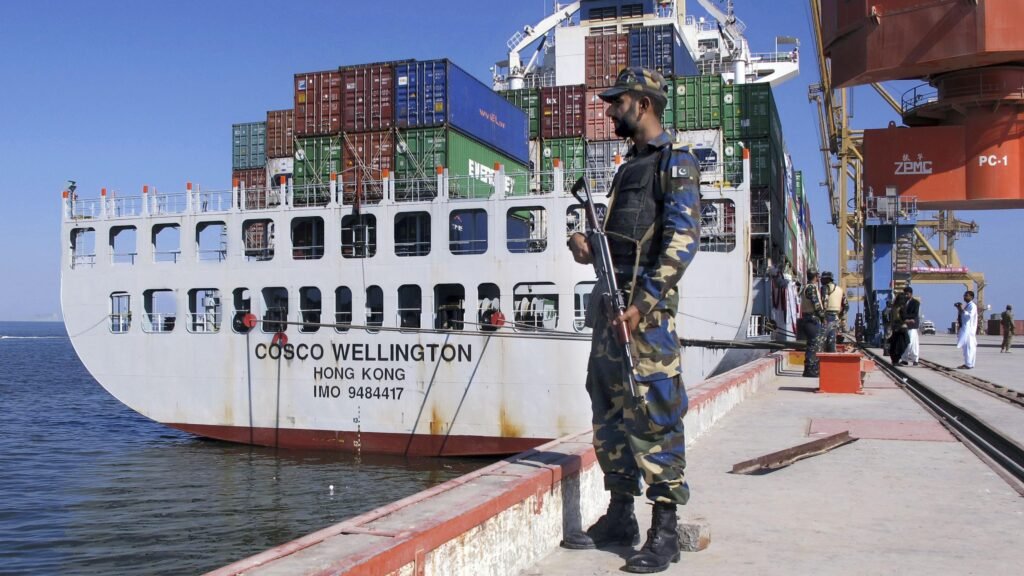
Pakistan remains one of the most prominent partners through the China-Pakistan Economic Corridor (CPEC), which has supported investment in energy, transport infrastructure and the development of Gwadar Port. During CPEC’s first phase, Chinese investment helped add nearly 8,000 megawatts of electricity generation capacity and supported major infrastructure projects. However, the next phase faces the challenge of moving beyond large infrastructure schemes towards stronger industrial cooperation, exports and private-sector investment.
The two countries have sought to reposition the corridor under the CPEC 2.0 framework, with greater emphasis on industrial development, agriculture, mining, technology and trade. During Prime Minister Shahbaz Sharif’s visit to China in May 2026, both sides agreed to advance the upgraded corridor, pursue the phased realignment of the Karakoram Highway between Thakot and Raikot, and develop Gwadar as a regional connectivity hub. They also welcomed third-party participation in CPEC under an agreed framework.
These commitments point to an effort to broaden the economic relationship, but implementation will be crucial. Pakistan needs to improve its business environment, strengthen export capacity, ensure the security of Chinese personnel and projects, and create conditions that encourage long-term private investment. The success of CPEC 2.0 will depend not only on new projects but also on whether existing infrastructure can generate wider economic activity and employment.
Bangladesh is another important part of China’s economic engagement with South Asia. China is a major source of machinery, textiles-related inputs, electronics and industrial goods for the country, while Chinese companies have invested in sectors including manufacturing, energy and infrastructure. The relationship offers opportunities for Bangladesh to expand its industrial capacity and diversify its economic partnerships.
However, the trade relationship remains heavily tilted towards imports from China. In fiscal year 2024-25, Bangladesh imported approximately US$18.56 billion worth of goods from China, while its exports to the Chinese market stood at around US$694 million, leaving a substantial trade deficit. The challenge for Dhaka is to attract investment that can strengthen domestic production, create jobs and improve the competitiveness of Bangladeshi exports, rather than allowing the relationship to remain primarily import-driven.
India presents a different picture. Despite political and border tensions, China remains one of its largest trading partners. In the 2025-26 financial year, India’s imports from China reached approximately US$131.63 billion, while exports to China stood at US$19.47 billion. Electronics, machinery, chemicals and industrial inputs account for a significant share of India’s imports, reflecting the importance of Chinese supply chains to Indian manufacturing.
This economic interdependence exists alongside strategic competition and unresolved border issues. The resumption of limited border trade through designated Himalayan routes in 2026 indicated some scope for practical engagement, but broader political and security concerns continue to shape the relationship. India’s approach demonstrates that economic ties with China can remain substantial even when strategic trust is limited.
Nepal, meanwhile, sees connectivity with China as a way to diversify its trade routes and reduce its dependence on transit through India. The two countries signed a Framework for Belt and Road Cooperation in December 2024, identifying ten potential projects, including roads, a cross-border railway, energy infrastructure and industrial development. However, progress has been slow, with pre-feasibility studies for many of the projects still incomplete by mid-2026.
Geography and difficult terrain remain major obstacles to the development of cross-border infrastructure. Monsoon floods and landslides in 2026 also disrupted key trade routes and border crossings, highlighting the vulnerability of Nepal’s connectivity infrastructure to extreme weather. For Kathmandu, the challenge is to translate agreements into financially viable projects while balancing its relations with both neighboring powers.
Sri Lanka’s experience illustrates both the opportunities and risks associated with large-scale Chinese economic engagement. Chinese-backed infrastructure projects, including port and transport developments, have played a visible role in the country’s development. Yet the economic crisis of 2022 intensified scrutiny of debt, project financing and the long-term returns of major investments.
Sri Lanka’s outstanding bilateral debt to China declined from approximately US$8 billion in 2022 to US$4.9 billion in 2025, although China remained its largest bilateral lender. A proposed US$3.7 billion Sinopec oil refinery project at Hambantota has also faced delays over unresolved terms, including arrangements for domestic sales and exports. The experience highlights the importance of transparent agreements, sound project evaluation and ensuring that investments generate sustainable economic returns.
Other countries in the region have approached China according to their own economic and strategic priorities. The Maldives has engaged with China on infrastructure, tourism and development cooperation, while Bhutan remains cautious in its engagement with Beijing amid unresolved border issues. Afghanistan, with its mineral resources and strategic location, has also attracted Chinese interest, although insecurity, limited infrastructure and political uncertainty continue to constrain large-scale economic activity.
Across these different relationships, China’s economic presence is increasingly connected to trade, infrastructure and supply chains. But the region’s ability to benefit from this engagement depends on more than bilateral projects. South Asia remains one of the least economically integrated regions in the world, despite its geographic proximity, shared markets and complementary resources.
The World Bank estimates that intraregional trade in South Asia stands at only about one-third of its potential, leaving an annual trade gap of approximately US$44 billion. Political tensions, complex customs procedures and weak regional institutions continue to constrain economic integration. The Bank also estimates that a regional electricity market among Bangladesh, Bhutan, India and Nepal could save around US$17 billion in capital costs.
China can contribute infrastructure, investment and access to wider markets, but it cannot by itself resolve the political and institutional barriers that limit cooperation among South Asian countries. Regional governments must improve trade facilitation, simplify customs procedures, strengthen cross-border transport links and identify areas where cooperation can deliver shared benefits.
The next phase of economic development will also be shaped by technology and the digital economy. South Asia has a growing base of digital services, technology businesses and skilled workers, but the benefits remain unevenly distributed. India’s information and communications technology sector, for example, accounts for more than 22 per cent of the country’s total exports and 6.5 per cent of GDP, according to the World Bank. Similar opportunities exist across the region in digital infrastructure, e-commerce, financial technology and skills development.
Cooperation with China could support these sectors through investment, technology partnerships, training and improved digital connectivity. However, countries will need to develop local skills, strengthen regulatory frameworks and ensure that technology cooperation contributes to domestic innovation and productive capacity.
Ultimately, China’s economic engagement with South Asia should be assessed not only by the volume of trade or the number of infrastructure projects completed, but also by the extent to which it supports sustainable growth, local industries, employment and regional connectivity. For South Asian countries, the priority should be to negotiate partnerships that serve national development goals while creating opportunities for cooperation across borders.
The region’s economic future will depend on its ability to turn external partnerships into broader regional progress. China can help build roads, ports, power plants and digital networks, but South Asian governments must create the conditions for these connections to benefit the region as a whole.
The Silk Road will not be complete when China is well connected to South Asia. Can the region now make itself well connected to itself
About the Author
Md. Tarek Hossain is a Bangladesh-based Economic Data Journalist and founder of the Regional Media Research Network (RMRN), which monitors regional media and cross-border developments across South Asia.