Pakistan-Türkiye offshore exploration enters a new phase as Oruç Reis heads to Karachi
By Sajida Farheen Farhee-
November 12 (Daily Global South)- For nearly two decades, Pakistan’s offshore oil and gas exploration sector remained largely inactive, with limited exploration activity and unsuccessful drilling attempts discouraging further investment. The withdrawal of international companies, including ExxonMobil following the unsuccessful Kekra-1 offshore well in 2019, further highlighted the geological and financial risks associated with exploring Pakistan’s offshore resources.
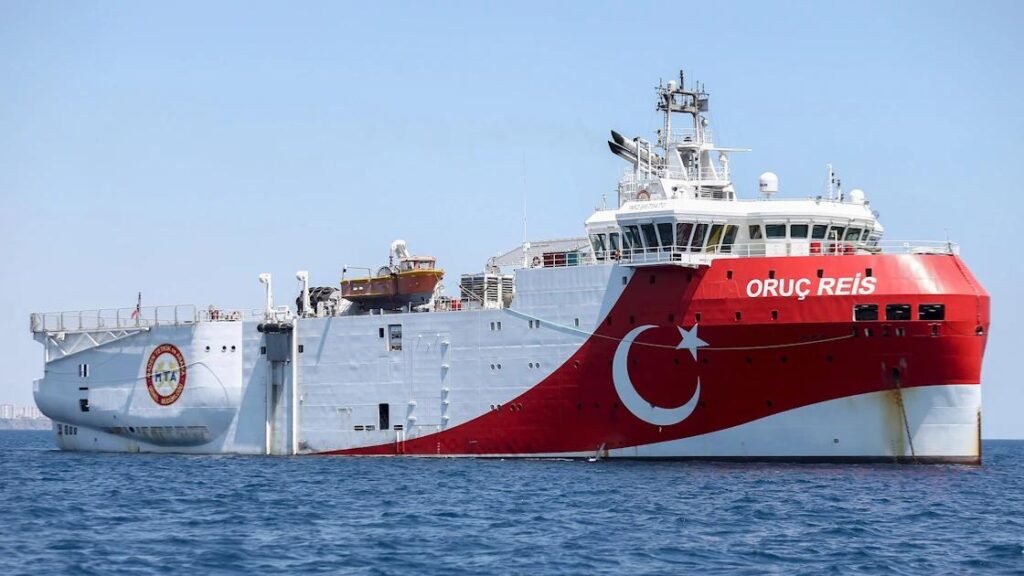
Now, Pakistan is seeking to revive its offshore exploration efforts through renewed international partnerships, with Türkiye emerging as an important partner. The Turkish seismic research vessel Oruç Reis is expected to arrive in Karachi between November 17 and 20, 2026, marking a significant development in Pakistan’s efforts to assess its offshore hydrocarbon potential after an 18-year gap in offshore bidding.
The initiative builds on cooperation between Türkiye’s state-owned Turkish Petroleum Corporation (TPAO), its offshore subsidiary Turkish Petroleum Offshore Company (TPOC), and Pakistani energy companies, including the Oil and Gas Development Company Limited (OGDCL), Pakistan Petroleum Limited (PPL) and Government Holdings Private Limited (GHPL).
Under Pakistan’s Offshore Bid Round 2025, exploration licences were awarded for 23 of the 40 offshore blocks offered. TPAO secured a 25 percent stake and operatorship in the Eastern Offshore Indus-C block, alongside Pakistani partners. The agreements provide a framework for joint exploration and potential future development of oil and gas resources.
Federal Minister for Petroleum Ali Pervaiz Malik recently chaired a high-level meeting to review preparations for the vessel’s arrival. Representatives of TPOC, OGDCL, PPL, GHPL and relevant government departments and maritime institutions attended the meeting to discuss operational arrangements, security and coordination. The minister expressed the government’s commitment to facilitating the project and said he would endeavour to personally receive the vessel upon its arrival in Karachi.
The deployment of Oruç Reis represents an important technological component of the exploration initiative. The Turkish research vessel is equipped with advanced seismic survey technology designed to collect detailed information about geological structures beneath the seabed.
Using seismic waves, the vessel gathers data that can be processed and interpreted to identify geological formations that may contain oil and natural gas. Its six-streamer configuration, with each streamer extending up to eight kilometres, enables the collection of high-resolution seismic data across extensive offshore areas. The vessel’s capabilities also allow researchers to examine geological structures beneath the seabed at considerable depths.
Such surveys are an essential first stage of offshore hydrocarbon exploration. They help energy companies assess geological prospects and identify promising locations before committing substantial resources to exploratory drilling. However, seismic data alone cannot confirm commercially recoverable oil or gas reserves. Further geological assessment and exploratory drilling are necessary to establish the actual potential of any offshore discovery.
Türkiye has developed considerable experience in offshore exploration through its energy activities in the Black Sea and other international waters. Its seismic research vessel Oruç Reis previously conducted extensive surveys off Somalia, demonstrating Türkiye’s growing role in international energy exploration. Ankara has increasingly pursued overseas partnerships as part of its strategy to expand the international operations of its national petroleum company.
Turkish Energy and Natural Resources Minister Alparslan Bayraktar has also highlighted Pakistan as an important destination for Türkiye’s expanding offshore energy activities. The cooperation reflects the growing economic dimension of Pakistan-Türkiye relations, extending beyond traditional diplomatic and defence ties into energy exploration and technological collaboration.
For Pakistan, the renewed interest in offshore exploration comes at a time when energy imports continue to place considerable pressure on the country’s foreign exchange reserves. Greater knowledge of its offshore geological resources could help attract international investment and create opportunities to develop domestic oil and gas production.
According to Pakistan’s Petroleum Division, the initial three-year exploration programmes for the 23 awarded offshore blocks involve approximately $80 million in committed investment. If exploration progresses to the drilling stage, potential investment could increase to between $750 million and $1 billion, depending on the results and subsequent development decisions.
The economic significance of the initiative will ultimately depend on the findings of seismic surveys, the results of exploratory drilling and the commercial viability of any discoveries. Even promising geological indications do not automatically translate into production, particularly in technically challenging offshore environments.
Nevertheless, the renewed exploration effort offers Pakistan an opportunity to reassess its largely underexplored offshore basins, attract international expertise and strengthen its energy partnerships.
As Oruç Reis prepares to reach Karachi, expectations are building around a new phase of Pakistan-Türkiye cooperation in the Arabian Sea. The coming surveys will provide important geological information, helping determine whether the country’s offshore resources can contribute to its long-term energy security.
For Pakistan, the real test will be translating renewed international interest and technological cooperation into sustained exploration, investment and, ultimately, commercially viable domestic energy production.
About the Author
Sajida Farheen is a Gold Medalist and currently serving as Director (HR-IT-Media), the author previously worked as a Senior Analyst and has contributed to leading Pakistani publications. She is also a freelance journalist, columnist, poet and digital content creator.