Why climate diplomacy matters for Bangladesh
By. Mohammad Sofi Ullah
The geography of Bangladesh makes it one of the nations most vulnerable to the impacts of the global climate crisis. Located in the downstream part of the GBM river system, Bangladesh is threatened by sea-level rise, river erosion, salinity intrusion, flooding and climate-induced catastrophes. Bangladesh is vulnerable not only due to natural factors but also because of its high population density and climate-sensitive livelihoods, which also create vulnerabilities in the water sector (ICCCAD, 2024; UNDP, 2022). However, Bangladesh needs to turn these challenges into opportunities.
Climate diplomacy is vital because it connects domestic challenges with international cooperation, finance, technology and geopolitics. Given the approaching expiry of the 1996 Ganges Water Sharing Treaty in December 2026 and Bangladesh’s planned graduation from Least Developed Country (LDC) status in November 2029, climate concerns must be integrated into the foreign policy agenda, national security and regional cooperation.
Climate risks and economic security
The geographical location of Bangladesh has environmental, economic and social implications. Rising sea levels pose risks to coastal populations, agriculture, water sources and infrastructure. When coupled with storm surges and coastal erosion, the exposure of low-lying areas to risks increases, putting additional pressure on coastal protection measures. Salinity intrusion further threatens agriculture, drinking water and freshwater ecosystems, especially in coastal areas inhabited by farming and fishing communities (ICCCAD, 2024).
These pressures extend beyond environmental concerns, affecting food security, public health, employment and the long-term sustainability of coastal regions. Furthermore, climate-related disasters also affect infrastructure, production, government spending and development funding (World Bank, 2022; GoB, 2023). Environmental degradation adds to the financial strain and the growing need for adaptation. It is impossible for a country seeking sustainable growth and economic diversification to separate climate resilience from economic security.
Climate-induced mobility introduces yet another important dimension: riverbank erosion, frequent floods, salinity intrusion and coastal risks compel affected families to abandon their traditional occupations and relocate to cities. Consequently, cities such as Dhaka have to cope with additional pressure on housing, transport, drainage systems, water supplies and employment (World Bank, 2022).
These risks also have significant diplomatic implications. Bangladesh will need international support in the form of financial resources, technological assistance and scientific cooperation to protect its vulnerable communities and strengthen national resilience.

Transboundary water diplomacy
Water security is an important area where climate change intersects with geopolitical concerns. Bangladesh shares 57 transboundary rivers with neighbouring countries; 54 are shared with India, while three are shared with Myanmar. Much of the water flowing through its territory originates in upstream regions, and hence national water security depends on decisions taken upstream regarding water flows, withdrawals and infrastructure (UNECE, 2025). Bangladesh’s downstream location poses certain challenges, as about 60% of its population lives in areas at high risk of flooding, and water-related sectors face vulnerabilities arising from changes in river flows (UNECE, 2025; World Bank, 2021).
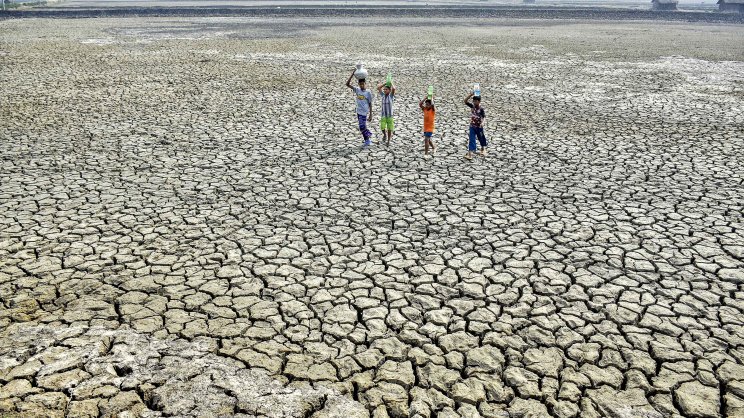
The seasonality of the GBM basin exacerbates these challenges. Monsoon flows cause flooding, while low flows during the dry season hinder irrigation, fishing, navigation, ecological health and drinking water supplies. The unpredictability of climate change, which will affect precipitation patterns and increase the risks of floods and droughts, creates further uncertainty. Therefore, water management needs to go beyond limited allocation arrangements based on bilateral relations and adopt a broader approach encompassing environmental flows, climate change adaptation, flood forecasting and basin-wide cooperation.
As demonstrated by the 1996 Ganges Water Sharing Treaty, bilateral diplomacy can achieve certain results but remains limited in scope. Given the approaching expiry of the treaty in December 2026, Bangladesh has an opportunity to seek a more transparent, scientifically grounded and predictable arrangement. Uncertainties regarding dry-season water availability and shortcomings in the existing sharing regime point to the need to account for hydrological changes.
It is imperative that Bangladesh treat negotiations concerning the Ganges, Teesta and other transboundary rivers as matters of national importance. Future agreements must include the sharing of hydrological information, monitoring systems, clear allocation procedures, environmental flow requirements, climate change impact assessments and dispute resolution mechanisms. Joint research and the management of flood and drought situations can bring practical benefits to all countries involved.
Bangladesh acceded to the United Nations Convention on the Protection and Use of Transboundary Watercourses and International Lakes, known as the UN Water Convention, on 20 June 2025. Bangladesh became the first South Asian nation to join the convention, strengthening the legal basis for international cooperation on shared water resources.
The convention facilitates equitable utilisation, the prevention of transboundary harm, data exchange and cooperation. Accession does not immediately resolve ongoing disputes. The success of this commitment lies in Bangladesh’s ability to translate its obligations into practice.
A balance between constructive bilateral engagement and principled multilateral diplomacy is crucial to the national interest. International law must go hand in hand with continuing dialogue with neighbouring countries, while scientific data, water-sharing practices and ecological considerations must guide the negotiation process.

LDC graduation and the climate finance challenge
Bangladesh is scheduled to graduate from least developed country status in November 2029. Although graduation signifies socioeconomic development, it also entails changes in international support programmes, such as preferential trade arrangements and concessional assistance. This transition comes at a time when Bangladesh needs to make significant investments in climate change adaptation and development.
The Bangladesh National Adaptation Plan (2023–2050) estimates that US$230 billion will be required for its implementation. The Bangladesh Delta Plan 2100 also requires substantial investment in water management, delta protection and sustainable development. Financing these activities, alongside education, healthcare, employment and industrial development, will be challenging.
Climate diplomacy should help Bangladesh broaden its financing sources and strengthen its capacity to prepare investment-ready projects. Instead of relying mainly on bilateral approaches, Bangladesh needs a well-diversified mix of grants, concessional financing, private investment, technological partnerships and innovative financing mechanisms. Debt sustainability, transparency and equitable benefit-sharing must remain integral parts of such a strategy.

First, Bangladesh must strengthen its capacity to mobilise climate finance from international sources, including the Green Climate Fund and other multilateral organisations. Proper project preparation, inter-agency coordination, environmental safeguards and monitoring will make it easier to meet international standards and national priorities. It is also important to improve direct access arrangements wherever feasible.
Second, Bangladesh must consider participating in the Article 6 mechanisms under the Paris Agreement in a carefully controlled manner. Properly managed carbon market activities can attract investment in renewable energy, energy efficiency and ecological restoration. This will require accurate emissions accounting, appropriate allocation of benefits and measures to prevent double counting. Carbon markets must complement, not substitute for, national actions.
Third, green bonds, resilience bonds and blended finance mechanisms could help mobilise private financing for the construction of climate-resilient infrastructure. These mechanisms could support coastal protection, renewable energy, climate-resilient transport systems, water supply and urban infrastructure. Nevertheless, such projects must be carefully assessed from both financial and environmental perspectives to ensure that they do not place an excessive burden on the state.

Fourth, Bangladesh should make more effective use of diplomacy to attract investment and strengthen technological cooperation. The Ministry of Foreign Affairs should coordinate closely with the Ministry of Finance to ensure that international financing arrangements are aligned with national development priorities.
The ultimate goal is to ensure that LDC graduation does not result in a climate finance penalty for Bangladesh. With stronger institutions and effective international collaboration, Bangladesh will be better positioned to access reliable and affordable funding without compromising its fiscal sustainability.
From climate vulnerability to global influence
Bangladesh has gained considerable expertise in climate adaptation, disaster risk reduction and international diplomacy. Its membership in the Least Developed Countries grouping, the Climate Vulnerable Forum and the V20 Finance Ministers enables the country to influence international agendas through diplomacy and collective bargaining.
The international recognition of loss and damage exemplifies the value of such diplomacy. For years, vulnerable nations have emphasised that traditional adaptation finance would not be sufficient to address irreparable losses caused by sea-level rise, extreme weather events and other impacts. The Warsaw International Mechanism, the Santiago Network and the establishment of the Loss and Damage Fund at COP27 were major milestones in international climate diplomacy.
Climate vulnerability, adaptation, and loss and damage have been discussed at academic and policymaking levels by researchers and diplomats from Bangladesh, including the late Professor Saleemul Huq. Their contributions have helped highlight the experiences of vulnerable communities in international forums and emphasise the need for climate justice beyond development aid.
Nevertheless, establishing international arrangements is only the first step. Their success depends on adequate funding, transparent and straightforward procedures, effective governance and timely disbursement. Bangladesh must continue playing an active role in shaping how the Loss and Damage Fund operates.
The country could also benefit from using its experience in adaptation to strengthen its international reputation. Bangladesh’s achievements in cyclone preparedness, community-based adaptation, disaster risk reduction and climate-resilient livelihoods can serve as valuable examples for other vulnerable countries. Such experience could help strengthen diplomatic relationships while creating opportunities for innovation and professional exchanges.
The Climate Prosperity Plan 2022–2041 outlined the country’s ambition to move beyond a focus solely on climate risks towards prosperity, investment, renewable energy and resilience. This principle remains relevant: climate action should contribute to economic transformation rather than merely compensate for environmental losses.
Climate science expertise could also serve as a powerful diplomatic tool. Rather than being known primarily for its climate vulnerability, Bangladesh should also be recognised for its scientific knowledge, adaptation efforts, negotiating experience and contributions to international policymaking. Through knowledge-sharing and international partnerships, Bangladesh can increase its influence in international forums.
Institutionalising climate diplomacy
To translate such opportunities into lasting benefits, Bangladesh must institutionalise climate diplomacy within its foreign policy establishment. Climate change now affects issues such as trade, investment, energy, food security, migration, water management and connectivity. Such matters cannot be addressed by environmental agencies or climate diplomats alone.
The Ministry of Foreign Affairs needs to develop specialised expertise in climate diplomacy, monitor climate-related issues in trade and financial relations, and engage with international organisations. Diplomatic missions should receive training in technical areas such as identifying financing mechanisms, facilitating research collaboration and negotiating agreements on climate technologies and renewable energy sources.
Just as important is coordination across ministries. The Ministry of Foreign Affairs will have to coordinate with institutions responsible for water management, finance, agriculture, energy, disaster management, the environment and economic planning. The national climate diplomacy strategy should address negotiation priorities, institutional accountability and measurable outcomes. Some examples could include the mobilisation of financial resources, technology partnerships, water cooperation and adaptation initiatives.

Floating agriculture in Bangladesh demonstrates how locally developed adaptation practices can sustain agricultural livelihoods amid flooding and waterlogging, offering lessons for international climate cooperation and knowledge-sharing. Photo: Reuters
It is also important to encourage greater cooperation at the regional level. There are several areas, such as flood forecasting, drought prevention, renewable energy, disaster management and ecosystem conservation, where Bangladesh may be able to achieve meaningful cooperation despite difficult political relations.
Ultimately, international agreements must be linked to implementation, monitoring and evaluation within the country. Climate finance must have positive impacts on the lives of those who are most vulnerable to climate change. Implementation is what makes all the difference.
Climate diplomacy and the way forward
Climate change is an environmental crisis, a development challenge, an economic threat and a geopolitical concern. Its effects extend beyond the coastal regions of Bangladesh, affecting everything from fisheries and transboundary river management to agriculture, international financing and economic transformation following LDC graduation. Climate diplomacy should be viewed as an integral element of the national interest rather than merely a specialised activity associated with environmental conferences abroad.
There are three important priorities that the country should pursue: defending water security and national interests through principled and evidence-based climate diplomacy; securing predictable and affordable international financing for adaptation, mitigation and addressing loss and damage; and enhancing its influence on international climate governance through science and innovation.
To achieve these goals, Bangladesh needs a foreign policy that is firm but not belligerent, cooperative without compromising its own interests, and ambitious but pragmatic in its understanding of economic and institutional realities. International law can strengthen water diplomacy, economic ties can expand climate finance opportunities, and experience in adaptation can enhance the country’s global influence.
Climate diplomacy, ultimately, matters because it can turn Bangladesh’s geographical vulnerabilities into sources of strength. By integrating water security, economic resilience, international finance and global leadership into a cohesive foreign policy strategy, Bangladesh can protect its citizens and sustain its development progress.
The article was originally published on The Daily Star