Azerbaijan marks six years since victory as reconstruction, regional diplomacy advance
By. Anastasiya Lavrina-
Six years after Azerbaijan’s victory in the 2020 Second Karabakh War, the South Caucasus has undergone significant political and geopolitical changes. The November 2020 ceasefire, Azerbaijan’s establishment of full control over Garabagh in September 2023, and subsequent diplomatic initiatives have reshaped the regional environment, creating new possibilities as well as challenges for political and economic cooperation.
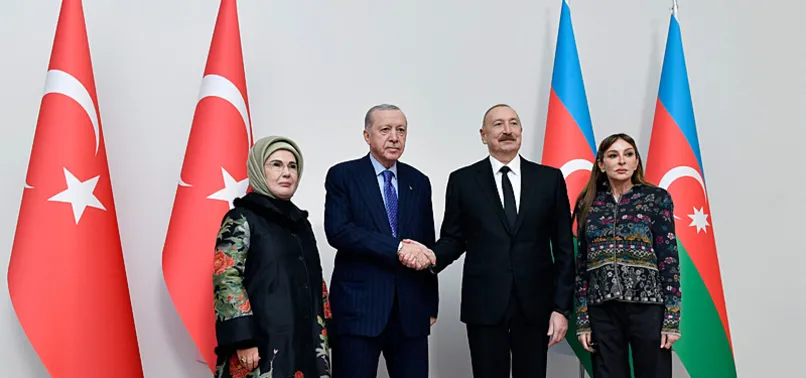
November 8, 2026, marked the sixth anniversary of Azerbaijan’s Victory Day. President Ilham Aliyev addressed the nation from Khankendi, while Turkish President Recep Tayyip Erdoğan visited Garabagh and held talks with his Azerbaijani counterpart in Shusha. The events highlighted Azerbaijan’s priorities in the post-war period, including consolidating sovereignty, strengthening national security, advancing reconstruction and expanding regional partnerships.
The 44-day war in 2020 transformed a regional status quo that had persisted for nearly three decades. Azerbaijani forces regained control over substantial territories, including Shusha, which was captured on November 8, a development that became central to Azerbaijan’s annual Victory Day commemorations.
The November 10, 2020 trilateral statement signed by the leaders of Azerbaijan, Armenia and Russia established a ceasefire and provided for the return of Aghdam, Kalbajar and Lachin districts to Azerbaijan. These territories were subsequently transferred in accordance with the agreed arrangements.
In September 2023, following a military operation by Azerbaijan, Baku established full control over Garabagh, ending the region’s previous de facto political and military arrangement. The operation was followed by the departure of more than 100,000 ethnic Armenians from the region to Armenia, a major humanitarian and demographic consequence that continues to shape the post-conflict environment.
In his Victory Day address, President Aliyev highlighted the discipline and unity of Azerbaijan’s armed forces, stating that no soldier had deserted during the 44-day war. He attributed the country’s military success to years of economic development, defence modernization, institutional capacity and political leadership. He also emphasized Azerbaijanism as a national ideology intended to unite the country’s ethnic and religious communities through shared citizenship and civic solidarity.
The president’s remarks reflected the Azerbaijani government’s emphasis on military preparedness, economic strength and national unity as pillars of its post-war security policy. The longer-term challenge is to ensure that the changes achieved through the conflict contribute to regional stability and sustainable development.
President Erdoğan’s visit to Shusha further highlighted the strategic importance of the Türkiye-Azerbaijan relationship. The two countries signed the Shusha Declaration on Allied Relations in June 2021, establishing a framework for expanded cooperation in defence, security, transportation and economic development. During their November 8 meeting and joint statements, both leaders reaffirmed their commitment to bilateral cooperation and regional peace.
The partnership extends beyond security. Azerbaijan and Türkiye occupy important positions along energy and transportation routes connecting the Caspian region with Europe. Projects such as the Southern Gas Corridor and the Baku-Tbilisi-Kars railway, alongside the development of the Middle Corridor, demonstrate the economic and strategic importance of their cooperation for Eurasian connectivity.
Another major priority for Azerbaijan is the reconstruction of Garabagh and East Zangezur. Speaking at the eighth Congress of the New Azerbaijan Party in October 2026, President Aliyev said that 28 billion manats had been allocated for the development of these regions and that 96,000 people were living, working or studying there. In his November 8 anniversary address, he put the figure at approximately 97,000.
The reconstruction programme includes new roads, residential settlements, energy infrastructure, industrial facilities and public services. However, landmine contamination, employment opportunities, sustainable resettlement and the development of local economic activity remain important considerations for the region’s long-term recovery.
Diplomatic developments have also influenced the regional political environment. On August 8, 2025, Azerbaijani President Ilham Aliyev and Armenian Prime Minister Nikol Pashinyan met in Washington at the invitation of US President Donald Trump. The meeting resulted in a joint declaration signed by the two leaders and witnessed by Trump. Their foreign ministers also initialled the agreed text of a peace agreement, marking a significant step in the normalization process.
The Washington declaration also outlined plans to advance regional connectivity, including the proposed Trump Route for International Peace and Prosperity (TRIPP) through Armenian territory. The initiative could create new transportation links between Azerbaijan and its Nakhchivan exclave while offering wider connectivity opportunities for the region.
Although the peace agreement has not yet been formally signed and ratified, the Washington process has provided a framework for further diplomatic engagement. Its implementation will depend on continued negotiations and agreement on outstanding issues between the two countries.
These developments are taking place amid broader geopolitical changes. Türkiye has maintained its position as Azerbaijan’s strategic ally, while Russia’s role in the South Caucasus has evolved. The United States has become more directly involved in the peace process, while the European Union and China have economic and strategic interests in the region’s energy, trade and transportation networks.
Azerbaijan’s geographical position between the Caspian Sea and the wider Black Sea region offers opportunities to strengthen its role as a transport and logistics hub. The Middle Corridor, which connects China and Central Asia with Europe through the Caspian Sea, the South Caucasus and Türkiye, has gained importance as countries seek to diversify international trade routes.
Six years after the 2020 war, Azerbaijan is entering a new phase focused on reconstruction, economic development and regional diplomacy. The restoration of its control over Garabagh, the expansion of strategic partnerships and the return of displaced residents have become central elements of its post-war agenda.
The next challenge is to translate these developments into sustainable economic growth, effective regional connectivity and a durable peace with Armenia. The extent to which diplomatic commitments are implemented and economic cooperation expands will play an important role in shaping the South Caucasus in the years ahead.
About the Author
Anastasiya Lavrina is a political analyst based in Azerbaijan, a research fellow at the Institute for Development and Diplomacy at ADA University, and a PhD student in National Security at Renmin University of China.